
By Bob Rider, Founder & Director — HRC Dayton
If you’ve ever brought up hair loss with your primary care physician and walked away feeling like the conversation went nowhere, you’re not alone.
Maybe they said something like, “It’s probably genetic,” or “There’s not much we can do about that.” Maybe they ran a quick thyroid panel, everything came back normal, and the subject was quietly dropped. You left with no real answers — and maybe a quiet feeling that you were supposed to just accept it.
Here’s what I want you to know: your doctor wasn’t dismissing you. They were doing exactly what a primary care physician is trained to do. The issue isn’t attitude. It’s scope.
What a Routine Appointment Is Designed For
Primary care physicians are generalists. They are trained to manage an enormous breadth of conditions — cardiovascular health, diabetes, infections, mental health, preventive care, and hundreds of other concerns — all within a 15-to-20-minute appointment. They are remarkable at what they do.
But hair loss is a specialty. And like most specialties, it deserves more time and more specific tools than a general visit allows.
A typical GP visit for hair loss might include a visual observation, a basic blood panel, and perhaps a referral to a dermatologist. That’s a reasonable starting point. But hair loss has a surprising number of root causes, many of which that standard workup simply isn’t designed to catch. That is where a hair loss specialist comes into the picture.
The Information That Often Gets Left Behind
Here are a few things that frequently go unexamined in a standard medical visit for hair loss:
- Ferritin levels. Most blood panels test for anemia, but not all measure ferritin — the protein that stores iron in your body. Research published in the Journal of the American Academy of Dermatology has linked low ferritin levels to hair shedding even when a patient isn’t technically anemic. It’s a meaningful distinction that often gets missed.
- The hormonal picture beyond thyroid. TSH (thyroid-stimulating hormone) is the standard thyroid marker, but it doesn’t capture the full hormonal conversation happening in your body. Sex hormone imbalances, elevated androgens, postpartum hormonal shifts, and perimenopause-related changes can all contribute to hair loss and they require different tests to identify.
- Scalp health. This one surprises people. A compromised scalp environment such as inflammation, buildup, seborrheic dermatitis, or folliculitis can quietly suppress healthy hair growth for years. The scalp itself is rarely examined in any meaningful depth during a general appointment.
- Hair loss pattern and progression. Where the loss is occurring, how it’s distributed, and how it has progressed over time tells a trained specialist a great deal about what’s driving it. This kind of visual and diagnostic assessment takes time and a trained eye.
None of this is a criticism of your physician. These simply aren’t tools that belong in a 15-minute general visit. They belong in a specialized consultation — the kind that’s designed entirely around hair and scalp health.
What a Hair Loss Specialist Conversation Actually Looks Like
At HRC Dayton, a consultation isn’t a sales conversation. It’s a diagnostic one.
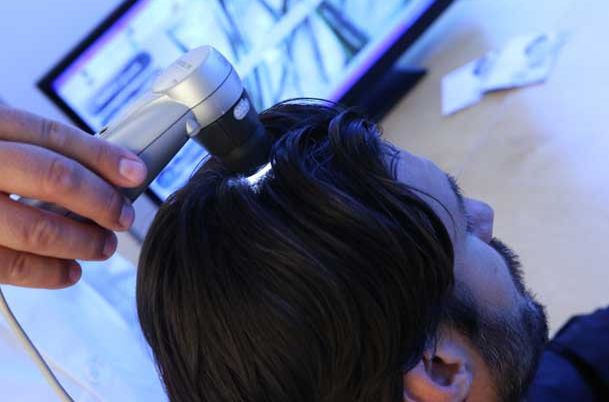
We look at your hair loss pattern under magnification. We ask detailed questions about your health history, medications, stress levels, diet, and lifestyle. We examine the scalp itself. We talk through what you’ve already tried, and why some of it may or may not have worked.
The goal is to build a complete picture. Because hair loss that looks identical on two different people can have entirely different causes and therefore require entirely different solutions. Treating them the same way leads to the frustrating cycle many people have already experienced: products that don’t work, advice that doesn’t land, and a growing sense that nothing can be done. That sense is almost never accurate.
The Most Important Thing to Know
Hair restoration has changed dramatically. The options available today — non-surgical options for men, state of the art hair loss solutions for women, surgical, trichological, and combination approaches — are more natural-looking, more effective, and more individually tailored than most people realize. And critically, earlier evaluation almost always means more options, not fewer.
The conversation your primary care physician couldn’t quite finish? We’d be glad to continue it. There is no pressure, no obligation, and no script. Just a thorough, honest conversation with an experienced hair loss specialist about where you are and what’s actually possible.
GET ANSWERS TODAY. CLAIM YOUR PRIVATE CONSULTATION
Bob Rider is the Founder and Director of HRC Hair Replacement Clinic in Dayton, Ohio, with over 40 years of experience in hair restoration for men and women. HRC Dayton is the region’s exclusive provider of CRLAB CNC hair restoration technology.
Sources:
- Rushton DH. Nutritional factors and hair loss. Clinical and Experimental Dermatology. 2002.
- Shapiro J. Clinical practice: Hair loss in women. New England Journal of Medicine. 2007.
- American Hair Loss Association — www.americanhairloss.org
